

Apr 7, 2026
You've probably seen the term "executive taxi" listed as an upgrade option when booking a cab. But what does it actually mean? Is it just a fancier car, or is there more to it? And the question most people quietly wonder is it worth the extra cost?
Let's break it down properly.
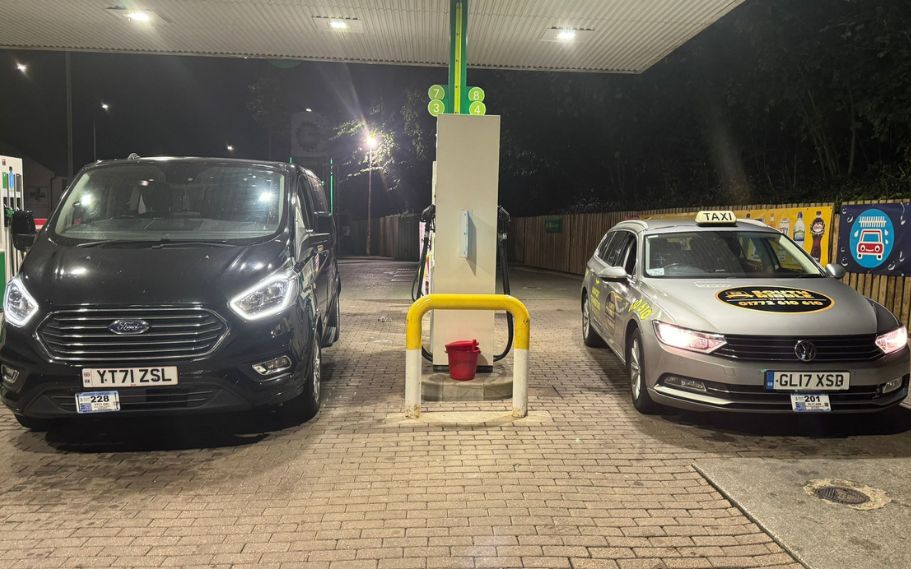
An executive taxi is a higher-grade private hire vehicle that offers a noticeably better experience than a standard cab. Think premium saloon cars, estate cars, or high-end MPVs vehicles like a Mercedes E-Class, BMW 5 Series, or Volkswagen Passat Estate driven by a professional chauffeur-level driver who understands that the journey itself matters, not just the destination.
The key difference between an executive taxi and a regular taxi comes down to three things: the vehicle, the driver's conduct, and the overall service standard. All three are expected to be a step above what you'd get from an ordinary private hire booking.
Here's what a genuine executive taxi service typically includes:
It's worth noting that executive taxis in the UK are always operated as private hire vehicles (PHVs) or sometimes as licensed hackney carriages. Either way, the driver must hold the appropriate licence issued by the local authority, and the vehicle must pass regular inspections. The rules around this are set out by the Department for Transport in their Taxi and Private Hire Vehicle Licensing guidance.
This is the question most people are really asking. Here's a straightforward comparison.
Standard Taxi:
Executive Taxi:
If you're heading to a job interview, a client meeting, or a black-tie event, the difference is felt immediately. You arrive composed, on time, and without the slightly chaotic energy that can come from a rushed standard booking.
The honest answer? More people than you'd think.
The obvious use cases are corporate ones, business professionals travelling to meetings, executives needing airport transfers, or companies booking transport for visiting clients. In those situations, turning up in a clean, quiet premium car sends a message before you've even walked through the door.
But executive taxis are also regularly used for:
It's less about status and more about reliability and comfort. Most people who book executive transport regularly do so because they've been let down by a standard cab at an inconvenient moment and they decided not to let that happen again.
Pricing varies by operator and region, but there are a few consistent patterns in the UK market.
Executive taxis almost always operate on fixed fares, quoted before you travel. This is actually one of their biggest advantages. You know exactly what you'll pay before you get in the car, which makes budgeting straightforward for both individuals and businesses.
The fare will typically account for:
For businesses, executive taxi costs are generally straightforward to expense, and many operators can provide account-based billing or invoices for this purpose.
At South Ribble Taxis, the quoted price is the price you pay. No hidden fees, no surge pricing, and no last-minute increases. That kind of pricing transparency matters, especially when you're booking for someone else or coordinating transport for a group.
Not every operator who calls their cars "executive" actually delivers an executive experience. Here's what to check before you book.
1. Licensing The driver and vehicle must both be licensed by the local licensing authority. You can ask for the licence number or check the plate displayed on the vehicle. In England, this is regulated under the Local Government (Miscellaneous Provisions) Act 1976 and overseen locally by district or borough councils.
2. Vehicle condition Ask what model of vehicle you'll be travelling in. A genuine executive taxi operator will be proud to tell you. If the answer is vague, that's a sign.
3. Fixed pricing Get the fare agreed before you travel. A reputable executive taxi service will always give you a fixed quote.
4. Punctuality track record Read reviews. Punctuality matters more for executive travel than almost anything else. A driver who's ten minutes late to a standard booking is inconvenient. The same situation before a flight or a meeting is a different problem entirely.
5. Flight and train tracking If you're booking an airport transfer, confirm that the driver monitors your flight. Delays happen the driver should already know before you've landed.
Airport transfers are probably the most common executive taxi use case in the UK, and for good reason.
Getting to an airport on time requires precision. You're working to a fixed departure window, often with luggage, sometimes in the early hours of the morning, and the consequences of a no-show or late arrival are expensive and stressful.
An executive airport transfer gives you a pre-booked, fixed-price journey with a driver who arrives on time, helps with luggage, and (on the return leg) monitors your flight so they're there when you land, not twenty minutes after.
South Ribble Taxis covers transfers to all major airports from the Lancashire area, including Manchester, Liverpool, Leeds Bradford, and the London airports. The fixed-fare model means you can price the journey in advance and not worry about surge pricing or metered costs during busy periods.
If you manage business travel for a team, or if you travel regularly for work yourself, an executive taxi account is worth considering seriously.
The practical benefits are real: professional presentation, reliable punctuality, fixed costs that are easy to expense, and a level of service that reflects well on your organisation when clients are involved.
Many operators, including South Ribble Taxis, also handle commercial contracts for corporate accounts which can include account-based billing and priority booking arrangements.
Yes, and this is worth understanding clearly.
All taxi and private hire vehicles in England must be licensed under local authority rules. Drivers go through background checks, including a Disclosure and Barring Service (DBS) check, before they can be licensed. Vehicles must meet roadworthiness standards and pass regular inspections. The Department for Transport publishes statutory taxi and private hire vehicle standards that local licensing authorities are expected to follow.
So when you book with a licensed executive taxi service, you're booking a driver who has been checked and a vehicle that has been inspected. That's a baseline guarantee you don't always get with informal or app-based alternatives.
An executive taxi isn't a luxury product in the way people sometimes assume. It's a specific type of private hire service that offers a consistent, professional experience, fixed pricing, premium vehicles, punctual drivers, and a noticeably higher standard of care from booking to drop-off.
Whether you need reliable airport transfers, comfortable transport to a business meeting, or simply a better experience for a special occasion, it's a service that earns its price.
If you're in Lancashire and want to know more, South Ribble Taxis covers executive car bookings alongside its full range of private hire services from local journeys and school runs through to airport transfers and group travel across the region.
What makes a taxi "executive"?
An executive taxi uses a premium vehicle, typically a high-spec saloon or MPV and offers a higher standard of service than a standard cab. This includes fixed pricing, professionally presented drivers, and pre-booked journeys. The experience is quieter, more comfortable, and more reliable than a standard private hire booking.
Is an executive taxi the same as a chauffeur?
Not exactly. A chauffeur service typically involves a full-time, dedicated driver assigned to one person or organisation, often with additional duties. An executive taxi offers a comparable level of comfort and presentation for individual journeys, but operates as a pre-booked private hire service rather than a retained arrangement.
How much does an executive taxi cost compared to a standard taxi?
Prices vary by operator and route, but executive taxis usually cost 20–40% more than a standard cab for the same journey. The difference reflects the vehicle quality, driver standards, and service inclusions. Most operators quote a fixed fare upfront, so you always know the cost before you travel.
Can I book an executive taxi for an airport transfer?
Yes, and airport transfers are one of the most popular uses for executive taxi services. A good operator will track your flight and adjust pick-up times if your departure or arrival changes. South Ribble Taxis offers airport transfers to Manchester, Liverpool, Leeds Bradford, and the London airports from across Lancashire.
Do I need to tip the driver of an executive taxi?
Tipping is never required but is always appreciated. In the UK, it's common to round up the fare or add a small gratuity if the service is good. Because executive taxis use fixed pricing, you'll already know the total cost before the journey ends tipping is entirely at your discretion.


.svg)
Officially Gold Standard Awarded taxi operator! Book with confidence.
© 2026 South Ribble Taxis. All Rights Reserved.


